
 English
 اللغة العربية
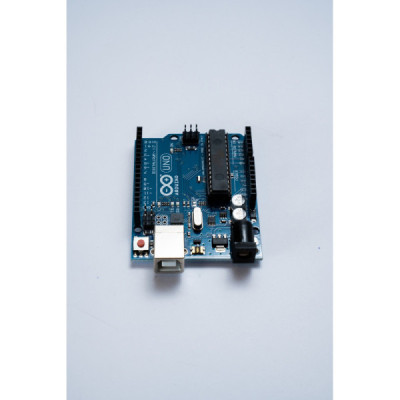
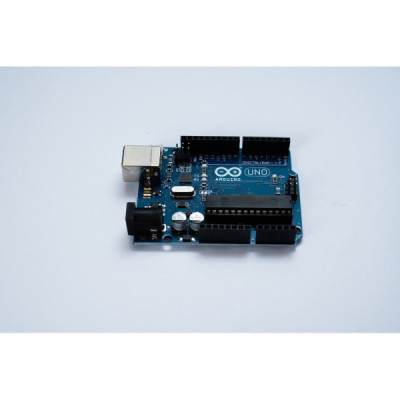
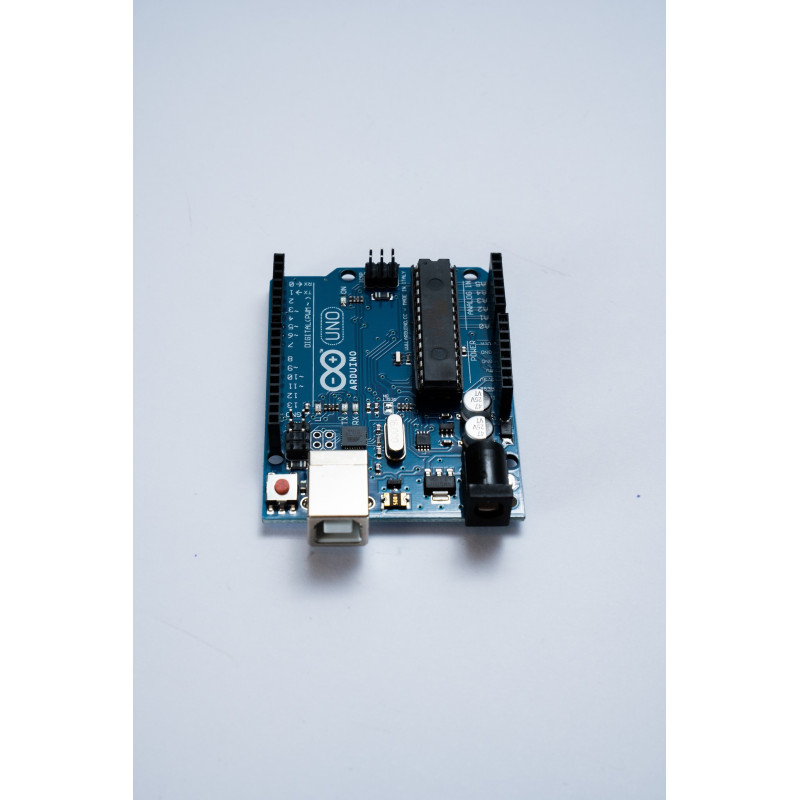
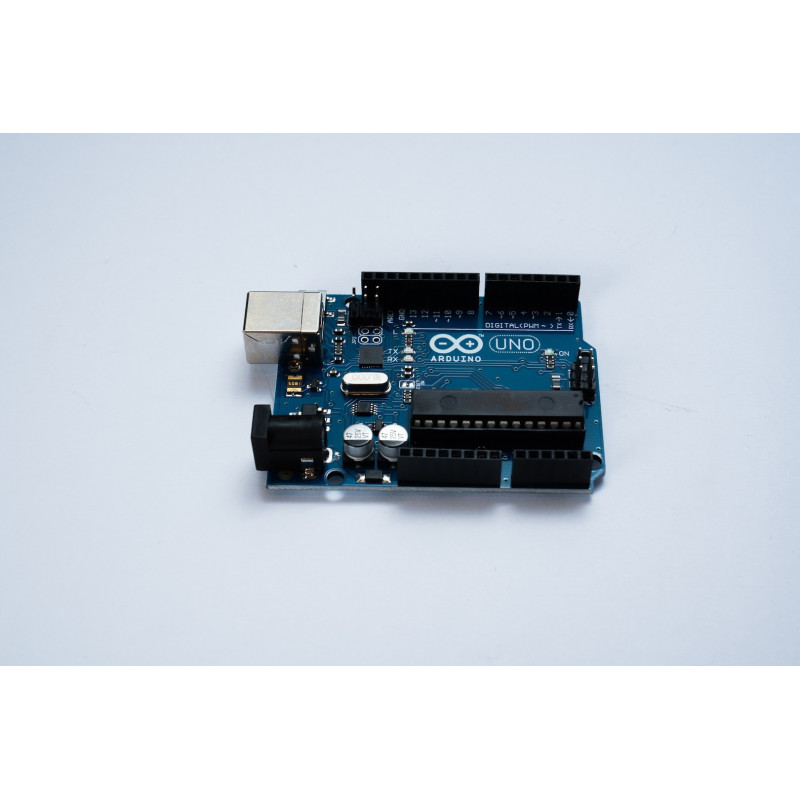
Reference: ARDUINO UNO - R3
Summary
Arduino UNO is a microcontroller board based on the ATmega328P. It has 14 digital input/output pins (of which 6 can be used as PWM outputs), 6 analog inputs, a 16 MHz ceramic resonator, a USB connection, a power jack, an ICSP header and a reset button. It contains everything needed to support the microcontroller; simply connect it to a computer with a USB cable or power it with a AC-to-DC adapter or battery to get started. You can tinker with your UNO without worrying too much about doing something wrong, worst case scenario you can replace the chip for a few dollars and start over again.
Summary
Tech Specs
Here you will find the technical specifications for the Arduino UNO R3.
|
Board |
Name |
Arduino UNO R3 |
|
SKU |
A000066 |
|
|
Microcontroller |
ATmega328P |
|
|
USB connector |
USB-B |
|
|
Pins |
Built-in LED Pin |
13 |
|
Digital I/O Pins |
14 |
|
|
Analog input pins |
6 |
|
|
PWM pins |
6 |
|
|
Communication |
UART |
Yes |
|
I2C |
Yes |
|
|
SPI |
Yes |
|
|
Power |
Circuit operating voltage |
5V |
|
Input voltage (recommended) |
7-12V |
|
|
Input voltage (limit) |
6-20V |
|
|
Supported battery |
9V battery |
|
|
Battery connector |
Power jack |
|
|
DC Current per I/O Pin |
20 mA |
|
|
DC Current for 3.3V Pin |
50 mA |
|
|
Clock speed |
Main Processor |
ATmega328P 16 MHz |
|
USB-Serial Processor |
ATmega16U2 16 MHz |
|
|
Memory |
ATmega328P |
2KB SRAM, 32KB FLASH, 1KB EEPROM |
|
Dimensions |
Weight |
25 g |
|
Width |
53.4 mm |
|
|
Length |
68.6 mm |
|
Summary